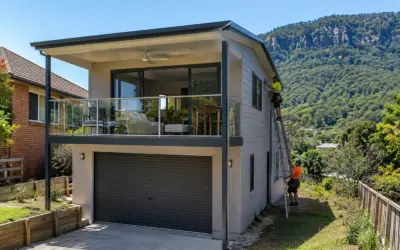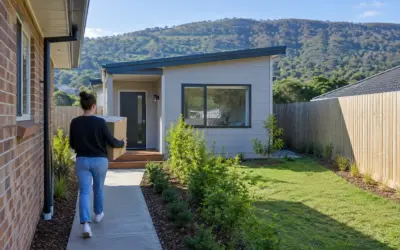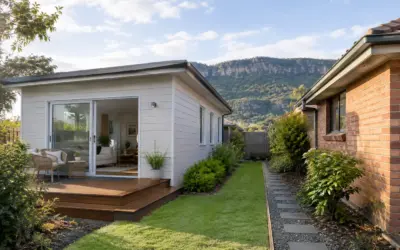
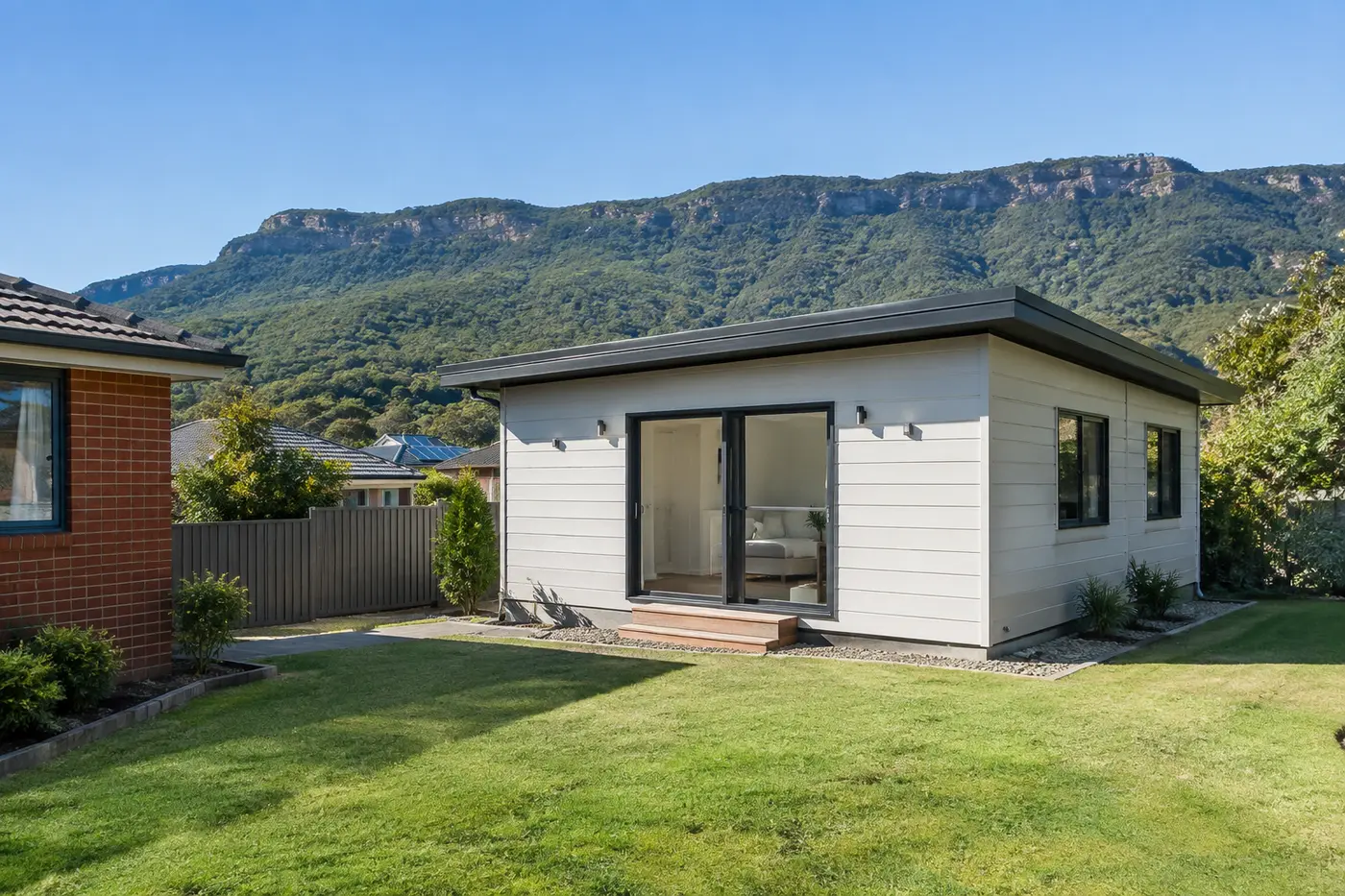
A call we get most weeks goes something like this. Someone in Corrimal or Figtree has three quotes for a granny flat on the kitchen bench. The prices are miles apart, the paperwork all looks different, and they want to know how to choose a granny flat builder without getting burnt. Fair question. A granny flat is a proper building project, and the builder you pick will shape the cost, the timeline and how much sleep you lose along the way.
We build granny flats across the Illawarra and Southern Highlands, so yes, we have a horse in this race. But most of what follows applies to any builder you talk to, including us. Use it as a checklist.
The cheapest quote is often the least complete one
When quotes are far apart, it is rarely because one builder is a genius with a cheaper way to frame a wall. Usually the low quote simply leaves things out.
The usual suspects are site costs. Connecting to sewer, water and stormwater. Excavation and retaining on a sloping block. Electrical upgrades to the main house. Approval and certification fees. Driveways, fencing and paths. Some builders price all of this in. Others write “by owner” or “provisional” next to it and let you find out later.
This matters more in Wollongong than in a lot of places. Plenty of blocks between Thirroul and Dapto run uphill toward the escarpment, and a slope can change the footings, the drainage and the retaining needed. A quote prepared without anyone walking your site is a guess, however neat the PDF looks.
So before you compare prices, line the quotes up item by item. Ask each builder for a written list of inclusions and exclusions. If one quote says “turnkey”, ask exactly what that word covers, because it means different things to different companies.
Check the licence before you look at the photos
A glossy gallery tells you a builder can take a nice photo. It does not tell you they are licensed to do the work.
In NSW, anyone contracting to do residential building work needs a contractor licence. You can check a licence for free on the NSW Government’s online licence check through Service NSW. Look at three things: that the licence is current, that it covers the type of work, and that the name on the licence matches the name on your contract. If the contract is with a company, the company should hold the licence, not just someone who works there.
Next, ask about Home Building Compensation Fund insurance (HBCF). For residential jobs above a set contract value, NSW law requires the builder to take out this insurance and give you the certificate before they take a deposit or start work. It protects you if the builder dies, disappears or goes broke partway through. A builder who is vague about HBCF is a builder to walk away from.
NSW law also limits how big a deposit a builder can ask for, and gives you statutory warranties on the finished work. NSW Fair Trading sets out the current rules, and it is worth a ten minute read before you sign anything.
Local council knowledge saves more time than any shortcut on site
Most of the delays we see on granny flat projects happen before a single trench is dug. They happen in approvals.
In NSW, many granny flats can go through a complying development certificate (CDC), which is a faster approval path for projects that meet set planning rules. Others need a full development application (DA) through council. Which path you are on depends on your block, and the Illawarra has a few quirks. Land near Lake Illawarra and some creek lines can be flood affected. Blocks on the edge of the escarpment are often bushfire prone. Some streets carry heritage controls. Each of these can change what is allowed and how long it takes.
A builder who knows Wollongong, Shellharbour and Kiama councils should be able to tell you at the first site visit which approval path you are likely on, and why. If they cannot, or they promise a fast approval without looking at your planning certificate, be wary. We cover the CDC and DA paths in more detail in our guide to granny flat approvals in the Illawarra.
A granny flat specialist and a general builder suit different people
A general home builder can certainly build a granny flat. The question is whether it is their main game or something they fit in between bigger jobs. Small projects have a habit of sliding down the list when a large renovation needs the same trades.
Specialist granny flat builders tend to work from a set of proven designs. The upside is that those designs have already been through approvals many times, the pricing is well understood, and there are fewer surprises. The trade-off is less freedom. If you want a one-off architectural design with a curved roof and a mezzanine, a fixed design builder is not your best fit, and an honest one will tell you so.
That is how we work ourselves. We design and build fixed-design, CDC-approved granny flats, and we are backed by Jaya Builds, a local Illawarra construction company. We are not a national company with a Sydney head office and a showroom full of display homes. Whoever you choose, ask who actually does the building: their own team, a local partner, or subcontractors they have never met. You can see how our granny flat construction process runs from site visit to handover.
Kits and prefab are a different decision, not just a cheaper builder
Granny flat kits get a lot of searches around Wollongong, and the price on the box can look tempting. The catch is that a kit is a set of materials, not a finished building. Someone still has to get approval, prepare the site, lay the slab, connect services, assemble the thing and sign it off. If that someone is you, you are taking on an owner builder role, with the paperwork and risk that comes with it.
Factory built modules are a third option again, with their own crane access and transport questions on tight or steep blocks. We compare these approaches side by side in our prefab vs site built granny flat breakdown.
Questions worth asking at the first meeting
You do not need to grill anyone. But the answers to these will sort the organised builders from the rest fairly quickly.
- Is the licence in the same name as the contract?
- When will I get the HBCF certificate?
- What exactly is excluded from this price?
- Which approval path do you expect for my block, CDC or DA?
- Who will be on site day to day, and who do I call with a problem?
- Can I see or speak to someone whose granny flat you finished recently?
- How are progress payments staged, and what triggers each one?
- What happens if something goes wrong after handover?
Pay attention to how they answer, not just what they say. A builder who is relaxed about putting things in writing is usually a builder who does the job they quoted.
Signs a quote needs a second look
None of these automatically means a builder is dodgy. Together, they should make you slow down.
A price given over the phone with no site visit. Pressure to sign the same day because a “special” ends Friday. A deposit requested before any approval or insurance paperwork exists. Lots of provisional sums for things that could easily be priced. No written timeline, or one that leaves out the approval stage entirely. And reviews you cannot trace back to real local jobs.
On the flip side, a good sign is a builder who tells you something you did not want to hear. If your block is flood affected and they say so upfront, they are probably not going to spring nasty surprises on you later.
Talk to us about your block
If you are weighing up builders for a granny flat in Wollongong, Shellharbour, Kiama or the Southern Highlands, we are happy to walk your site and tell you plainly what is likely to work. Have a look at how our local granny flat builds come together, or call us on (02) 4203 3554, Monday to Friday, 7:00 AM to 5:00 PM.
Common questions about choosing a granny flat builder
How do I choose a granny flat builder in NSW?
Start with the basics that protect you: a current contractor licence in the same name as the contract, and HBCF insurance where the law requires it. Then compare quotes line by line rather than by the bottom number, and favour a builder who has inspected your site and can explain your likely approval path.
What should I look for in a granny flat builder?
Look for someone who builds granny flats regularly, puts inclusions and exclusions in writing, and knows your local council. Being able to speak with a recent customer is a good sign. So is a builder who answers questions directly instead of steering every conversation back to the price.
Will a builder know if my design will be approved?
A good one should give you a realistic view after seeing your block and its planning certificate. Builders who work with designs that regularly go through CDC can usually tell you early whether that faster path is open, or whether flood, bushfire or heritage controls mean a DA is more likely.
Can I change the design if I use a granny flat specialist?
It depends on the builder. Some offer fully custom plans, while fixed design builders like us work from proven layouts to keep approvals and pricing predictable. Ask early, because big changes to a fixed design can affect both the approval path and the cost.
Is a granny flat kit cheaper than using a builder?
The kit price usually covers materials only. Approvals, site works, the slab, plumbing, electrical work and assembly all cost extra, and someone has to take responsibility for the build. Once those are added, the gap often narrows, so compare the full finished cost rather than the kit price.
Can you build a granny flat for 100k?
We would not put a number on any granny flat without seeing the block first, because site costs vary so much from one property to the next. A flat, easy block and a steep escarpment block with tricky access can produce very different totals for the same design. Be cautious of any builder who quotes a firm figure sight unseen.