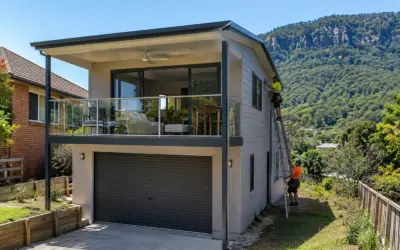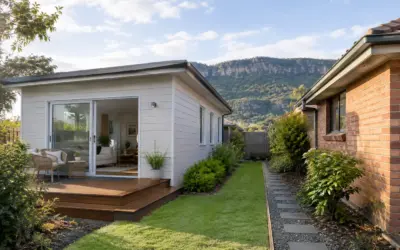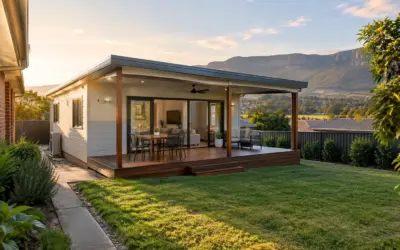
The build is finished, the certifier has signed off, and there’s a brand new one or two bedroom flat sitting in your backyard with nobody in it. Most of the owners we work with reach this point and realise they’ve spent months thinking about slabs and floor plans, and almost no time thinking about being a landlord. Renting out a granny flat in NSW is legal and fairly simple, but there are a handful of rules and practical choices that are much easier to get right before a tenant has the keys.
This guide covers what we see Illawarra owners trip over most: approval paperwork, the tenancy rules, bond, bills, tax and living a few metres from the people paying you rent.
Yes, you can rent it to anyone, as long as it was approved
In NSW a granny flat is a secondary dwelling. Unlike some states, there’s no rule that only family can live in it. You can lease it to a stranger on an ordinary residential tenancy agreement, the same way you’d lease a house.
The catch is the word “approved”. A flat built under a Complying Development Certificate (CDC) or a council Development Application (DA), with an Occupation Certificate issued at the end, is a legal dwelling. A converted shed or a garage with a kitchen thrown in usually isn’t, and renting one out can leave you exposed if there’s a fire, an insurance claim or a dispute that ends up at the tribunal. If you’ve bought a property with an existing flat, ask for the approval and the Occupation Certificate before you advertise it.
Two other rules come with the approval. The flat stays on the same title as the main house, and it can’t be subdivided or strata titled off and sold on its own. You can rent the house and the flat to two separate tenants, but you can’t split them into two properties.
Plan the rental before the slab goes down
This one surprises people. Some of the biggest decisions about how easy a flat is to rent are made at the design stage, long before you think about tenants.
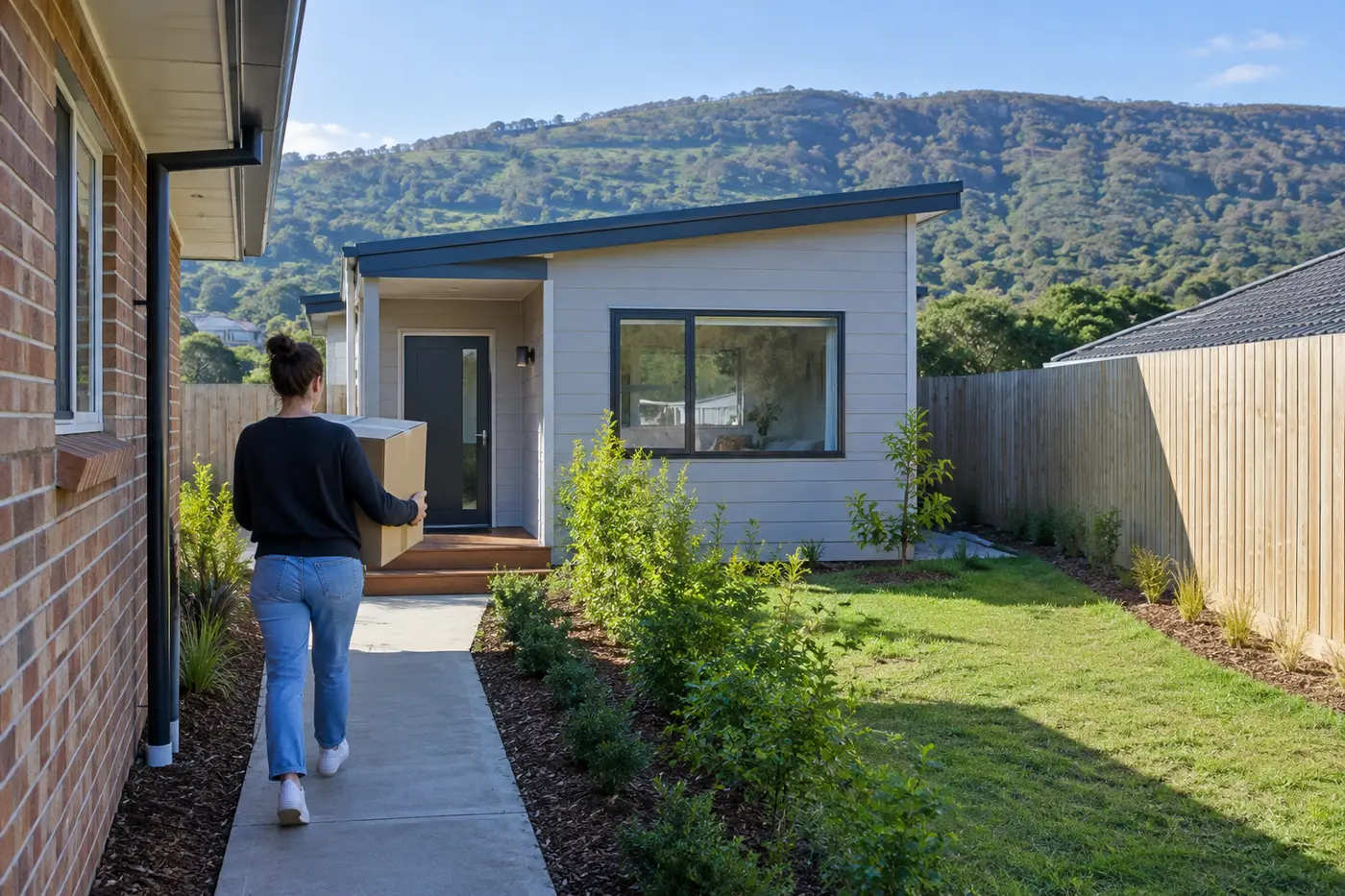
Separate access is the big one. A tenant who has to walk past your kitchen window or through your side gate every time they come home will feel it, and so will you. A path down the side of the block, a little fencing and a defined courtyard for the flat make it feel like a home rather than a spare room. Parking matters too, especially on narrower streets around Wollongong and Corrimal where kerb space is already tight.
Utilities are the other early call. If you want the tenant to pay their own power, the simplest setup is a separate electricity meter so they can open their own account with a retailer. Whether that’s practical depends on your switchboard and supply, and it’s far cheaper to sort out during the build than to retrofit later. Water works differently, and we cover that below.
A flat that’s built to be lived in independently, with its own kitchen, bathroom, laundry and entry, is the kind that rents well. That’s the brief behind our self-contained granny flat designs, which are drawn to fit inside the CDC rules from the start.
The tenancy rules are the same as for any rental
Once a tenant moves in, the Residential Tenancies Act applies just as it would to a house. There’s no lighter set of rules because the place is small or out the back. NSW Fair Trading publishes the current requirements and they do change, so check their site before you sign anyone up. In broad terms, a first time granny flat landlord needs to:
- use the standard NSW residential tenancy agreement and give the tenant the tenant information statement
- complete a written condition report, ideally with dated photos
- lodge any bond with NSW Fair Trading through Rental Bonds Online, rather than holding it yourself
- make sure smoke alarms are installed and working
- keep the flat in reasonable repair and respond to urgent repairs
- follow the rules on rent increases, entry notice and ending a tenancy
The rules on ending a tenancy deserve a closer look. NSW tightened them in 2025, and landlords generally now need a valid reason to end a lease. If your plan is to rent the flat for a couple of years and then move Mum in, that’s possible, but read the current Fair Trading guidance on notice periods first so the timing doesn’t catch you out.
You can manage it yourself or hand it to a local property manager. Plenty of owners self manage a single granny flat without trouble. The ones who use an agent usually do it because they’d rather not be the person a tenant knocks on the door to see about a dripping tap.
Bills: power is straightforward, water has conditions
If the flat has its own electricity meter and the tenant holds the account, power takes care of itself. If it doesn’t, most owners either include electricity in the rent or agree on a fair arrangement in writing at the start. Vague promises to “sort it out later” are where disputes begin.
Water is more tightly controlled. In NSW you can only pass water usage charges on to a tenant if the premises are separately metered and meet the water efficiency requirements set by Fair Trading. Most granny flats share the main house’s water connection, so in practice many owners simply factor water into the rent. Check the current Fair Trading rules on separate metering before you write water charges into a lease.
Tax, insurance and the costs that come off the rent
Rent from a granny flat is income, and the ATO expects it on your tax return. In return, the costs of renting it out can generally be claimed against that income, and the building itself may be depreciable. There’s also a capital gains angle. Renting part of your home can affect the main residence exemption when you eventually sell. None of this is a reason not to rent, but it’s worth a conversation with your accountant before the first tenant moves in, not at tax time.
Insurance is the step owners most often miss. A standard home policy may not cover a separate dwelling that’s leased to a tenant, and contents cover belongs to the tenant, not you. We’ve written a fuller guide to insuring a granny flat in NSW, including when landlord cover makes sense. Tell your insurer the flat exists and that it’s tenanted, then get their answer in writing.
Living next door to your tenant takes some thought
This is the part no spreadsheet captures. Your tenant isn’t across town. They’re across the lawn. Most arrangements we see work well, but the good ones have a few things in common.
Boundaries are agreed early. Who uses the clothesline, whether the tenant can use the backyard, where the bins go, and whether visitors can park in the driveway are all small things that become big things if they’re left unsaid. Put the important ones in the lease as additional terms.
Screening matters more than usual. With a house across town, a difficult tenant is a headache. With a flat behind your own home, it’s your evenings and weekends. Take references, check rental history and meet the person before you commit.
Privacy works both ways. Windows that face each other, a shared side path and outdoor areas within earshot all affect how comfortable everyone is. Good fencing and a bit of planting go a long way, and they also help the flat rent faster.
Long term lease or short stays?
Some Illawarra owners look at the coast and wonder about listing the flat for holiday stays instead. It can work, but it’s a different business with different rules. Short term rental accommodation in NSW has to be registered on the state register, there’s a separate code of conduct, and some areas have caps on how many nights a year a property can be booked without the host present. Strata and council rules can add their own conditions. It also means cleaning, linen, guest messages and uneven income through winter.
Most of the investors we build for want a steady long term tenant, predictable rent and as little to manage as possible. If you’re still weighing up whether the numbers stack up at all, our guide on whether a granny flat is a good investment in the Illawarra walks through the return side in more detail.
Start with a flat that’s easy to rent
The landlord side is manageable once you know the rules. The part that’s hard to fix later is the building itself: the access, the privacy, the meters and a layout that a tenant wants to live in. If you’re planning a granny flat to rent, have a look at our self-contained granny flats and book a free site inspection, and we’ll talk through how the flat would sit on your block before anything is drawn.
Common questions about renting out a granny flat
Can I rent out my granny flat in NSW?
Yes. In NSW an approved granny flat can be leased to anyone, not just family, on a standard residential tenancy agreement. It needs to have been approved through a CDC or DA and have an Occupation Certificate, and it must stay on the same title as the main house.
Can I rent out both the house and the granny flat?
Yes, you can lease the main house and the flat to two separate tenants on two separate agreements. What you can’t do is subdivide them, so both stay on one title under your ownership.
Do I pay tax on rent from my granny flat?
Yes. The ATO treats granny flat rent as assessable income, and the related costs can generally be claimed as deductions. Renting part of your home can also affect your capital gains tax position when you sell, so get advice from an accountant before you start.
Can I charge my tenant for water and electricity?
Electricity is simplest when the flat has its own meter and the tenant holds the account. Water usage can only be passed on in NSW if the premises are separately metered and meet the water efficiency requirements, so many owners include water in the rent instead.
Can I put my granny flat on Airbnb?
Often you can, but short term rental accommodation in NSW has to be registered with the state, follows a code of conduct and can be subject to limits on unhosted nights. Check the current state and council rules for your address before listing.
What are the downsides of renting out a granny flat?
The main ones are privacy, sharing outdoor space and the hassle if a tenancy goes wrong close to home. Separate access, good fencing, clear lease terms and careful tenant screening solve most of them.